A second location: what breaks when one repair shop becomes two
25.09.2026
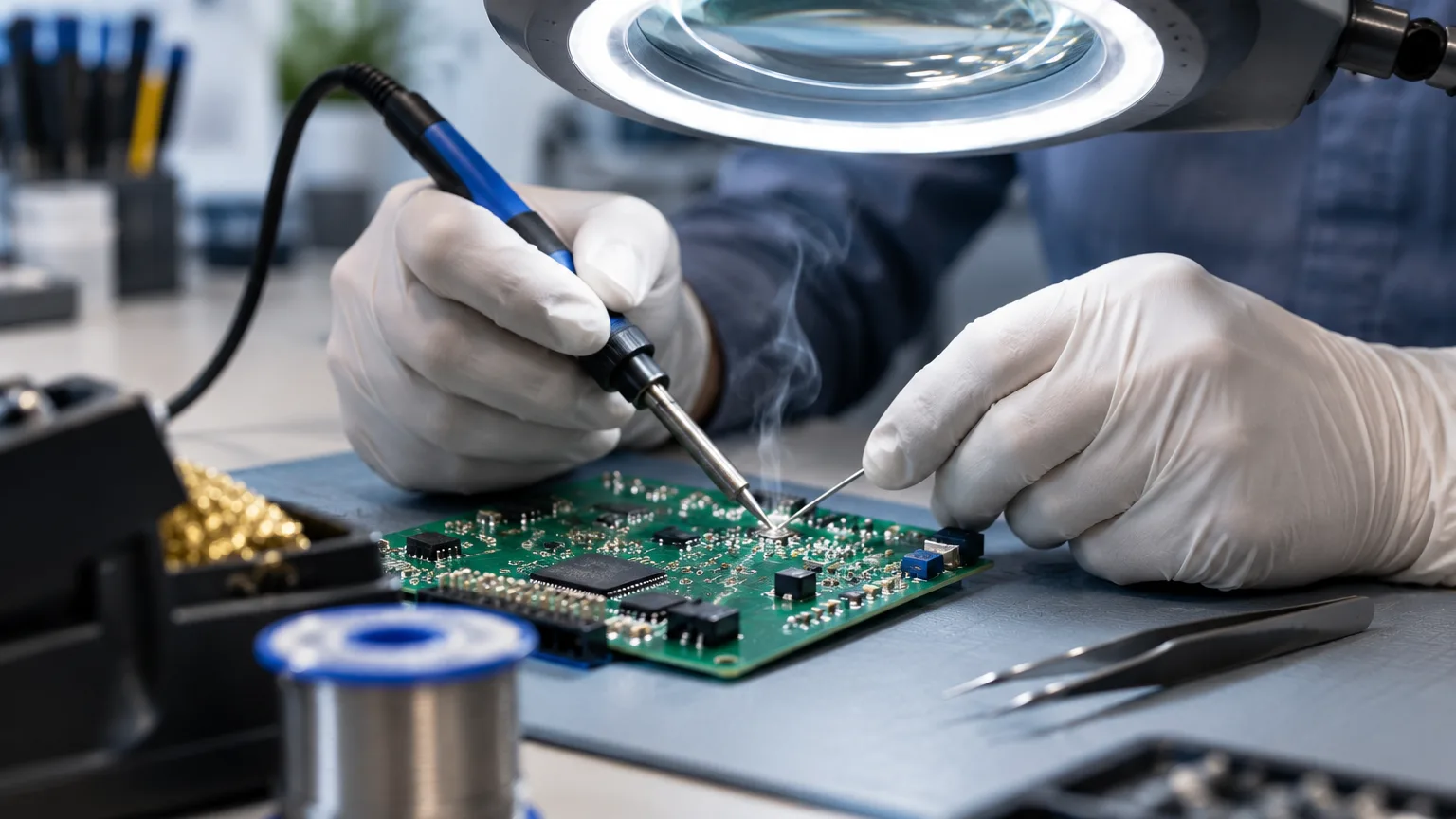
The first shop runs on its owner. They take in the tricky devices, remember the regulars, know where every part is and count the till themselves in the evening. A second location breaks exactly that. The owner cannot physically be in two places, and everything that relied on their memory and presence starts to slip. Below is what breaks most often and what is worth deciding before you open.
When a second location makes sense
A second location is rarely opened because there is spare money. More often the first shop cannot fit the work, or customers from the other side of town do not want to make the trip. A few signs that the time has really come:
- the first shop has made a steady profit for several months in a row rather than breaking even;
- a large share of your customers travel from the same part of town;
- the repair queue keeps growing and there is no room to expand the first shop;
- there is someone you can trust to run the location without daily supervision.
If only the first point holds, it may be better to hire one more technician for the first shop. That is cheaper and simpler than a second lease.
A drop-off point or a full workshop
The second location does not have to be a copy of the first. There are two approaches, and the choice between them shapes almost everything else.
A drop-off point. Devices are taken in and handed back there, but repaired at the main workshop. You need a front desk person, a small room and a regular run between the two locations. It costs less in rent and equipment, and the technicians and stock stay in one place. The downside is longer turnaround: every device travels there and back, and the customer notices.
A full workshop. Its own technicians, its own stock, repairs done on site. Turnaround is shorter, but costs double, and you have to keep standards and records the same in two places.
Many shops start with a drop-off point: for little money it shows whether the area has customers. Once the flow is steady, a technician moves in.
Who runs the second location
The most common mistake is to open a location and run it "remotely", dropping by twice a week. A month later it turns out devices are being taken in without job sheets, deadlines are promised at random, and regulars from the first shop somehow end up at the second one paying different prices.
You need a person who is responsible for the location: who makes decisions when you are not there and knows the rules. Not necessarily a separate manager — often it is the most experienced technician with a small bonus. What matters is this: they need authority (to turn a customer down, move a deadline, order a part) and limits (what only you decide).
Standards: what was in your head has to be written down
Nobody wrote the rules down in the first shop — everyone just knew them. For the second one you will have to put them into words:
- how to take a device in: what to check in front of the customer, what to note on the job sheet, how to record the condition of the case;
- terms: what diagnostics cost, how many days of storage are free, what warranty you give;
- how to quote a deadline and what to do when it slips;
- when a price can be lowered and who decides.
The simplest approach is the same job sheet with the same terms at both locations. Then a customer who drops a device off at one and collects it from the other sees no difference.
One job numbering and one customer base
If each location keeps its own log, you will very soon have two job sheets numbered 245 — one on the east side and one on the west side. And a regular who has been bringing devices to the first shop is a "new" customer at the second, with no history and no discount.
A rule worth introducing on day one: one continuous job numbering across the whole network and one customer base. Then a job number tells you at once which device is meant, and a customer’s phone number shows all their repairs, whichever location handled them.
Parts: who took what
Parts will start travelling between locations in the first week: the east side has a screen, the west side needs it. Without rules, a month later nobody knows where anything is or which repair it went into. The minimum:
- each location has its own stock, and the records show which location a part is at;
- moving a part between locations is recorded, not "I put it in my bag";
- a part is booked to a specific repair, not to "general needs".
Keep ordering from suppliers in one pair of hands: that makes it easier to get volume prices and harder to order the same part twice.
Money: each location’s takings separately
Even if both locations belong to one business, count each one’s takings separately. Otherwise you cannot tell whether the second location earns anything at all or lives off the first. The second location’s rent, wages and parts go on their own line too. For the first three or four months a second location is almost always in the red, and that is normal — but you need to see whether the loss is shrinking.
If the locations are registered as separate companies, each needs its own company details on job sheets and certificates. A business customer who receives a certificate with someone else’s details will not get it past their accountant.
People: who sees what
In a small shop everyone sees everything, and it bothers nobody. In a network it starts to matter: a technician at the second location sees the first one’s takings, the front desk sees the phone numbers of every customer in the network. It helps to separate access: staff work with their own location, while the whole network is visible to the owner and whoever you trust with it.
Pay is a separate question. If technicians earn a percentage, it has to be calculated on the repairs each of them actually did, not per location. How a per-technician report looks — on the reports page.
The owner’s control: what to look at every week
An owner who cannot be at both locations has to see them from one place. A few figures are enough to spot a problem in time:
- how many devices each location took in and handed out this week;
- how many repairs are overdue, and at which location;
- how many devices are ready but not collected;
- each location’s takings and how much each technician did.
If these figures have to be gathered by phone, the second location is already being run blind.
A customer between locations
A customer dropped a device off at one location but would rather collect it from the other. Or the device has to go where the right technician or equipment is. Agree in advance how this works: who carries it, how it is recorded and what the customer is told when they call. A device that is "somewhere between the two shops" is the fastest way to lose a customer.
How it works in the software
In ServiceCenterSoft a second location is a branch, not a second copy of the software. Job numbers run continuously, customers are shared, and a job can be moved to another branch by changing it on the job itself. Each branch has its own address and phone on the printed form and, if needed, its own logo and company details. Spare parts stock shows which branch a part is at, and statistics show how many devices were taken in, handed out and are in progress at each one. An employee without the right to see all branches works only with their own.
The subscription is per workshop, not per location or per user: a second branch is not billed separately. More on the branches and access rights page; to try it, see the demo.
Typical second-location mistakes
- Different prices for the same thing. Customers compare, and a price gap between two shops of the same network looks like a trick.
- Sending your best technician to the new location. The first shop sags, and at the new one they miss their usual stock and equipment. It is often better to send an experienced front desk person there and keep the technicians together.
- "We’ll set up the records later." Nobody ever transfers two months of the second location’s notebook, and that history simply disappears.
- Advertising only the first address. Google Maps, the sign and the website should know about both locations from day one.
Checklist before opening a second location
- There is a person responsible for the location, with authority and limits.
- Intake rules, terms and warranty are written down; the job sheet is the same.
- Job numbering is continuous, the customer base is one.
- Each location has its own stock; part transfers are recorded.
- The second location’s takings and costs are counted separately.
- Access is separated: everyone sees their own location, the owner sees the whole network.
- Every week the owner sees both locations’ figures in one place.
A second location is no longer a shop but a small network. The rules you write for it will serve the third one too, and the new hire at the first. So the time spent on them is not wasted, even if the second location opens later than planned.
New articles by email
Practical pieces for repair shops: intake, parts, money, customers. Only new articles, no ads.
We will send a confirmation email. You can unsubscribe in every email. How we store your address — see the privacy policy.